Replacing Old Railroad-Tie Retaining Walls Safely and Smartly
Old railroad-tie retaining wall failing? Learn about safety risks, replacement costs, and modern, long-lasting alternatives homeowners can trust.
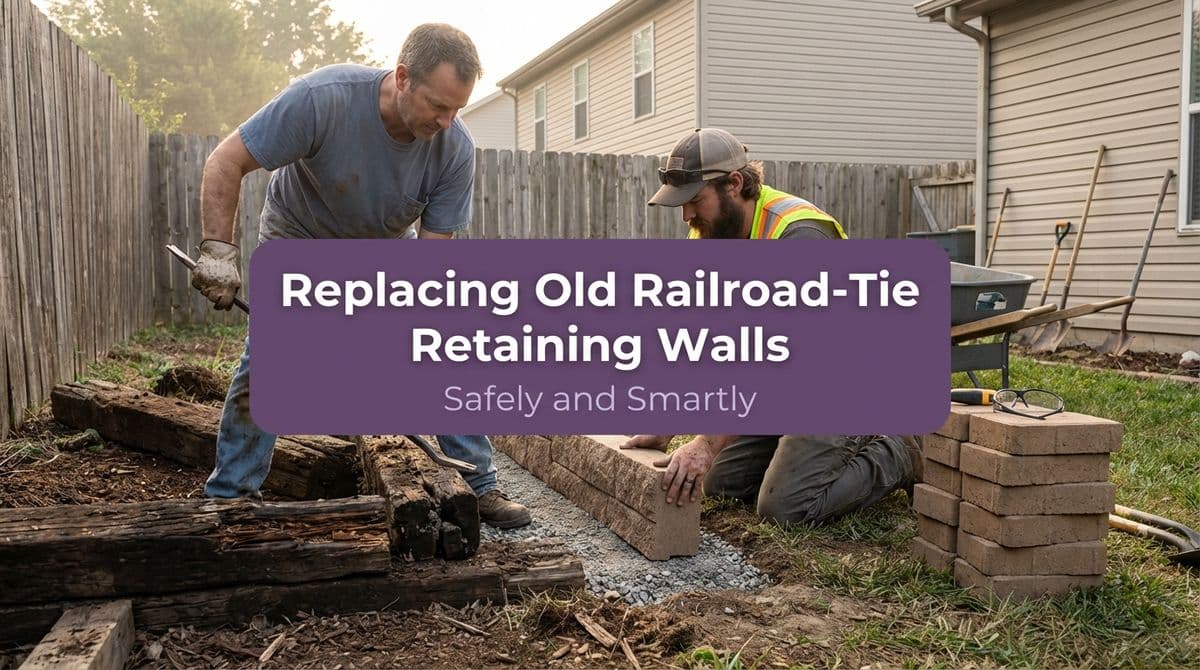
When Old Railroad-Tie Walls Start Failing
We recently got a call from a homeowner — let's call her Emily — who was worried about a big retaining wall in her backyard. The wall was built from old railroad ties, and she told us it was rotting, leaning, and just didn’t feel safe. She’d also heard replacing railroad ties could get pricey and wanted to know what her options were before things got worse.
That conversation is one we have a lot. Many homes built in the 70s, 80s, and 90s used timber or railroad-tie retaining walls. They worked for a while, but time, moisture, and soil pressure catch up. So we figured we’d walk through the same things we talked about with Emily: safety issues, costs, and the modern alternatives that make sense for most homeowners today.
Why Old Railroad-Tie Retaining Walls Become Unsafe
When we hear “it’s made out of railroad ties and it’s rotting,” a few red flags go up right away. Timber retaining walls aren’t designed to last forever, and several problems tend to show up at once:
- Rot and decay – Constant contact with damp soil breaks down the wood, even if it was treated. You’ll see soft spots, crumbling edges, or ties you can poke with a screwdriver.
- Leaning or bowing – As the wood weakens, the weight of the soil pushes the wall outward. A noticeable lean is a major structural warning sign.
- Shifting or gaps – Ties start to move, gaps open between them, and the soil begins to escape. That can undermine patios, paths, or fences above.
- Loose spikes or hardware – Old railroad spikes and rebar can work loose, becoming a tripping or injury hazard, especially for kids.
Any combination of these means the wall isn’t just ugly — it can be unsafe. In some cases, a failing wall can dump a surprising amount of soil in a single heavy rainstorm.
Health and Environmental Concerns With Old Railroad Ties
Another thing we talked about with Emily was the material itself. Many old railroad ties were treated with creosote or other preservatives. Over time, that can raise some concerns:
- Skin contact – Old, oozing, or crumbly ties can rub off black, tar-like residue that isn’t something you want kids or pets touching.
- Garden use – We generally don’t recommend using old railroad ties near vegetable beds or play areas.
- Disposal – These ties often can’t just go to a normal landfill. Proper handling and disposal are part of the cost of replacement.
Those environmental and disposal pieces are easy to overlook, but they do affect both budget and project planning.
What Replacing a Railroad-Tie Retaining Wall Actually Involves
Once we scheduled a site visit with Emily, we explained that replacing a wall is more than just swapping old ties for new materials. A typical replacement process looks like this:
- Assessment and measurement – We look at height, length, drainage patterns, and what the wall is holding back (a slope, a patio, a driveway, etc.).
- Permits and engineering (if needed) – Taller walls or walls near structures often need permits or an engineered design. Local codes usually kick in around 3–4 feet of height.
- Demolition and safe disposal – We carefully remove the old ties, spikes, and any failing drainage pipe, then haul and dispose of materials according to local rules.
- Excavation – We dig back behind the old wall to create room for the new system, remove unstable soil, and prepare a compacted base.
- Drainage installation – This is critical. We typically install perforated drain pipe, gravel backfill, and sometimes weep holes so water pressure doesn’t build up.
- Building the new wall – Depending on the material, this might mean stacking concrete blocks, pouring concrete, setting stone, or installing upgraded timber.
- Backfilling and compaction – We place gravel and soil in layers and compact as we go to reduce future settling and movement.
- Finishing and cleanup – Final grading, planting, or hardscaping finishes the area so it looks intentional and safe.
When homeowners see all the steps involved, the estimate starts to make more sense. You’re not just paying for “a wall”; you’re paying for a long-term fix that manages water and soil correctly.
Modern Alternatives to Railroad-Tie Retaining Walls
For Emily, we walked through several modern options. The right choice depends on budget, height, and the look you want, but here are the most common:
1. Segmental Concrete Block Walls
This is one of the most popular replacements we install:
- Pros: Durable, modular, attractive, available in many colors and textures, designed to interlock and drain properly.
- Typical lifespan: 40–75 years with proper installation and drainage.
- Best for: Most residential walls up to a certain height, terraced slopes, and areas where you want a clean, modern look.
2. Poured Concrete or Concrete Masonry
For heavier loads or very tall walls:
- Pros: Very strong, can be engineered for high loads, can be faced with stone or stucco for appearance.
- Typical lifespan: 50+ years when properly designed and drained.
- Best for: Driveway edges, steep cuts, or when space is tight and the wall must be thin but strong.
3. Natural Stone Walls
Stone gives a classic, timeless look:
- Pros: High-end appearance, very durable, blends well with landscaping.
- Typical lifespan: 50–100+ years when properly built and drained.
- Best for: Visible front-yard walls, garden terraces, and properties aiming for a natural aesthetic.
4. New Pressure-Treated Timber
Some homeowners still prefer the warmth of wood:
- Pros: Lower upfront cost than stone or concrete, natural look, works well for shorter walls.
- Typical lifespan: 15–25 years, depending on moisture, soil contact, and drainage.
- Best for: Smaller garden walls or areas where a future redesign is likely.
What Does It Cost to Replace a Railroad-Tie Wall?
Emily’s concern about cost is something we hear on almost every call. Without seeing the site, we can only talk ballpark, but a few factors drive the price:
- Wall height and length – A 2-foot garden wall is very different from an 8-foot wall supporting a driveway.
- Access – Can we reach the wall easily with equipment, or is everything hand-carried through a narrow side yard?
- Material choice – Timber is usually less expensive than stone or high-end block, but won’t last as long.
- Drainage and engineering – Added drains, geogrid reinforcement, or engineered plans add cost but also add safety and lifespan.
- Disposal – Hauling and disposing of old railroad ties with creosote treatment can be a significant part of the budget.
Most homeowners don’t need an exact number over the phone; they need to know whether they’re looking at a small, medium, or large investment. That’s why an on-site visit is so important — we can give a clear, written estimate once we see the conditions.
How Long Should a Replacement Wall Last?
One of Emily’s biggest questions was, “If we spend the money, how long will this last?” Here’s a simple comparison based on typical residential conditions and proper installation:
- New pressure-treated timber: about 15–25 years
- Segmental concrete block: about 40–75 years
- Poured concrete or engineered masonry: 50+ years
- Properly built stone: potentially 50–100+ years
The common denominator is good drainage. Even the best material will fail early if water is trapped behind the wall. That’s why we spend so much time on the parts you don’t see: base prep, drain pipes, gravel backfill, and compaction.
When to Call a Pro vs. When to Just Monitor
Not every old wall needs to be replaced tomorrow. Here’s a quick checklist we share with homeowners:
Call a professional soon if you notice:
- Visible leaning or bulging in any section of the wall
- Cracks or separations that are growing over time
- Large rot pockets or ties that crumble when you press them
- Soil washing out through gaps or onto paths after rain
- Surfaces above the wall (patio, fence, driveway) starting to settle or crack
You may be able to monitor for now if:
- The wall is low (2–3 feet) and shows only minor cosmetic wear
- There’s no noticeable lean and no recent movement
- Drainage seems to be working (no standing water behind or above the wall)
If you’re unsure which category your wall falls into, that’s exactly when a quick site visit from a pro can give peace of mind.
Thinking About Replacing Your Railroad-Tie Wall?
By the time we walked through all of this with Emily — safety, materials, lifespan, and costs — she felt much clearer on her options and what made sense for her yard and budget. That’s really our goal on every call.
If you’re looking at an old railroad-tie retaining wall that’s rotting, leaning, or just making you nervous, we always recommend getting it evaluated before it becomes an emergency. A planned replacement usually costs less, goes smoother, and gives you a safer, cleaner-looking yard for decades to come.