Designing a Low‑Maintenance, Pet‑Friendly Backyard
Learn how we turn weedy, muddy yards into low‑maintenance, pet‑friendly backyards using artificial turf, smart drainage, and simple planting design.
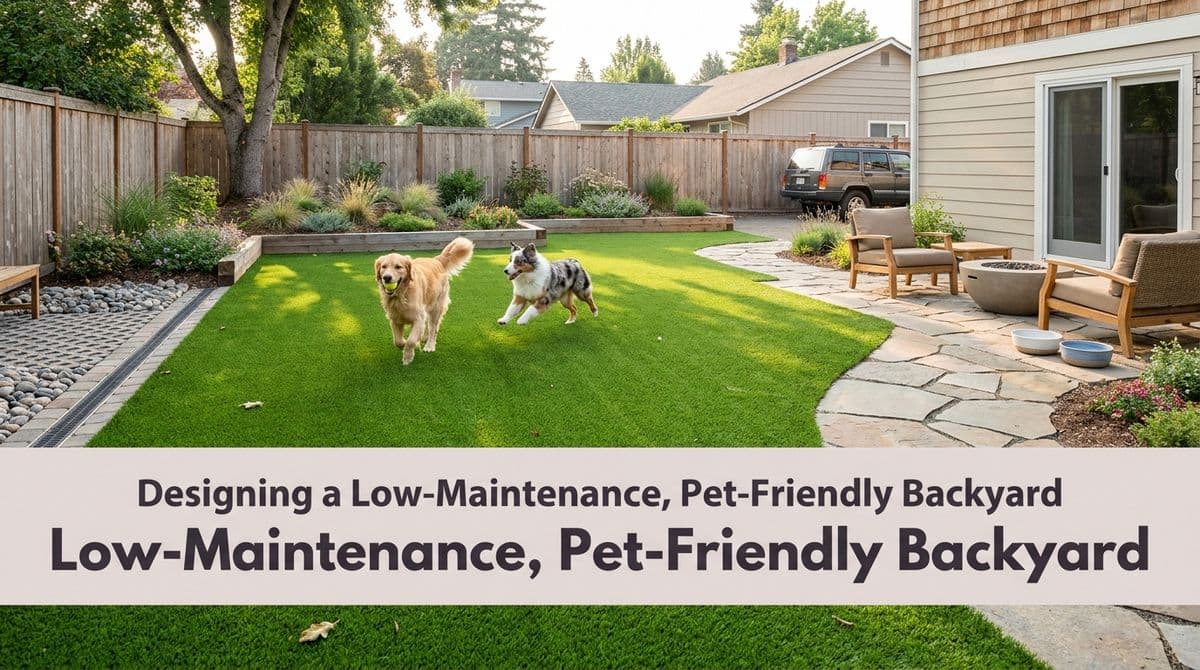
From Weedy “Jungle” to Pet‑Friendly Retreat
We recently got a call from a homeowner — let’s call him Jason — whose backyard had gotten away from him. The grass had turned into a jungle of weeds, the planting bed and retaining wall area were a mess, and every rainstorm left puddles sitting right where the dogs liked to play.
Jason’s wish list sounded a lot like what we hear from a lot of busy pet owners: a small, low‑maintenance backyard with pet‑friendly artificial turf, less mud, and better drainage — all on a pretty tight timeline.
On that call, we walked Jason through how we’d approach his yard so it could handle pets, weather, and everyday life without turning into a weekend project. We’ll walk you through that same process here.
Start With the Yard’s “Trouble Spots”
When someone tells us, like Jason did, that their backyard is “just full of weeds and grown like crazy,” we know the first step is diagnosing why the space is hard to manage:
- Shallow or compacted soil that won’t drain well
- Uneven grading that sends water toward the house or into low spots
- Thin, patchy grass that lets weeds take over
Before we ever talk turf styles or colors, we look at where water sits, how your dogs use the yard, and what areas you actually want to walk or entertain in. That layout drives everything else.
Why Pet‑Friendly Artificial Turf Beats a Struggling Lawn
For a small, overgrown backyard with pets, turf is often the simplest long‑term fix. When Jason said he wanted the current grass areas converted to turf, he was really asking for three things:
- Less maintenance – no mowing, edging, or reseeding bare spots.
- Pet durability – turf that can handle running, digging attempts, and bathroom breaks.
- Cleaner house – fewer muddy paws and dirt tracked inside.
Pet‑friendly turf products are designed with permeable backing so urine drains through instead of sitting on top, and the blades are sturdy enough to bounce back after playtime. When combined with the right base and drainage (more on that in a second), you end up with a yard that looks green year‑round with very little effort.
Turf vs. Natural Grass: Cost and Maintenance Snapshot
Homeowners often ask us how turf compares to natural grass over time, especially in a small backyard like Jason’s. Here’s a quick overview:
- Upfront cost: Turf installation usually costs more than reseeding or re‑sodding the same area because of excavation, base prep, and materials.
- Ongoing costs: Natural grass needs regular mowing, fertilizing, weed control, irrigation, and periodic repair — especially in high‑traffic pet areas. Turf needs only periodic rinsing and brushing.
- Pet damage: Dogs can quickly turn natural grass into mud or dead patches. Pet‑friendly turf resists digging better, doesn’t get bare spots, and drains urine away.
In a small yard, that higher initial investment in turf is often offset within a few years by lower water use, almost no lawn services, and fewer repairs. And you get the benefit of a consistently clean play space for the dogs.
Why Drainage Matters So Much in a Turf Yard
Jason also mentioned a big concern we hear all the time: drainage issues. Puddles in a turf yard aren’t just annoying; they can cause odors and shorten the life of your installation.
When we design a pet‑friendly yard, we focus on three drainage layers:
- Grading the soil
We make sure the yard has a gentle slope away from the house and toward a safe discharge point. Even in a small backyard, a difference of an inch or two can be the line between a dry yard and a soggy one. - Installing a permeable base
Under the turf, we use compacted layers of angular gravel or decomposed granite. This creates an open, stable structure that lets water pass through quickly instead of sitting at the surface. - Choosing the right turf backing
For pets, we specify turf with fully perforated backing so urine and rainwater can drain straight down into that prepared base.
In some yards, especially those with retaining walls or tight side yards, we’ll also recommend French drains or channel drains to move water out of low areas and protect hardscape and foundations.
Making the Whole Backyard Low‑Maintenance
Jason didn’t just want turf; he wanted the rest of the yard around the retaining wall to be low maintenance too. That’s where the design beyond the green area really matters.
Here are a few strategies we use in similar yards:
- Convert planting beds to rock or mulch with a quality weed barrier underneath, then add a few hardy, low‑water plants for structure.
- Use pavers or gravel walkways in high‑traffic zones so you’re not fighting mud or compacted soil.
- Keep edges simple – clean borders between turf, rock, and planting beds make it easier to blow leaves and keep things tidy.
The goal is to turn every area that used to be a weed patch into something that’s either functional hardscape or intentionally planted — nothing in between.
Pet‑Friendly Turf: Odor Control and Cleaning
When we talk to pet owners, a big question after drainage is, “Will it smell?” With the right setup and a few simple habits, the answer is no.
Our typical recommendations:
- Pick‑up first: Solid waste should always be picked up promptly, just like with natural grass.
- Rinse regularly: In busy pet yards, a quick hose‑down a couple times a week helps flush urine through the base.
- Use pet‑safe cleaners if needed: For stubborn spots, we suggest enzyme‑based cleaners designed specifically for turf.
- Brush the fibers: An occasional brushing keeps blades standing up and helps prevent matting in favorite “zoomie” zones.
Because the base and backing are designed for drainage, water and cleaners can move through easily, which is what keeps odors from building up.
Quick Checklist to Get Your Yard Ready for Turf
If you’re thinking about a project like Jason’s, here’s a simple checklist to help you prepare before an installation crew arrives:
- Decide which areas will be turf, hardscape, or planting beds.
- Note any puddles or soggy spots after a rain so they can be addressed in the drainage plan.
- Plan where your pets spend the most time so we can reinforce those zones.
- Clear toys, furniture, and clutter from the yard to make measurements and prep easier.
- Think about timing and any deadlines, like Jason’s end‑of‑month goal, so we can talk realistically about scheduling.
Ready to Tame Your Backyard “Jungle”?
Jason reached out because he was tired of wrestling with weeds, mud, and a yard that never quite worked for his dogs or his schedule. With a thoughtful combination of pet‑friendly turf, proper drainage, and low‑maintenance planting areas, a small backyard can feel bigger, cleaner, and a lot easier to live with.
If your yard sounds anything like his — overgrown, muddy, and hard for pets to enjoy — we’re happy to take a look at photos or a short video and talk through what’s possible for your space and timeline.