AstroTurf vs. Real Grass for Small Courtyards & Patios
Thinking about turf in a small enclosed courtyard or patio? Here’s how AstroTurf compares to real grass, plus smart design ideas from projects we do every week.
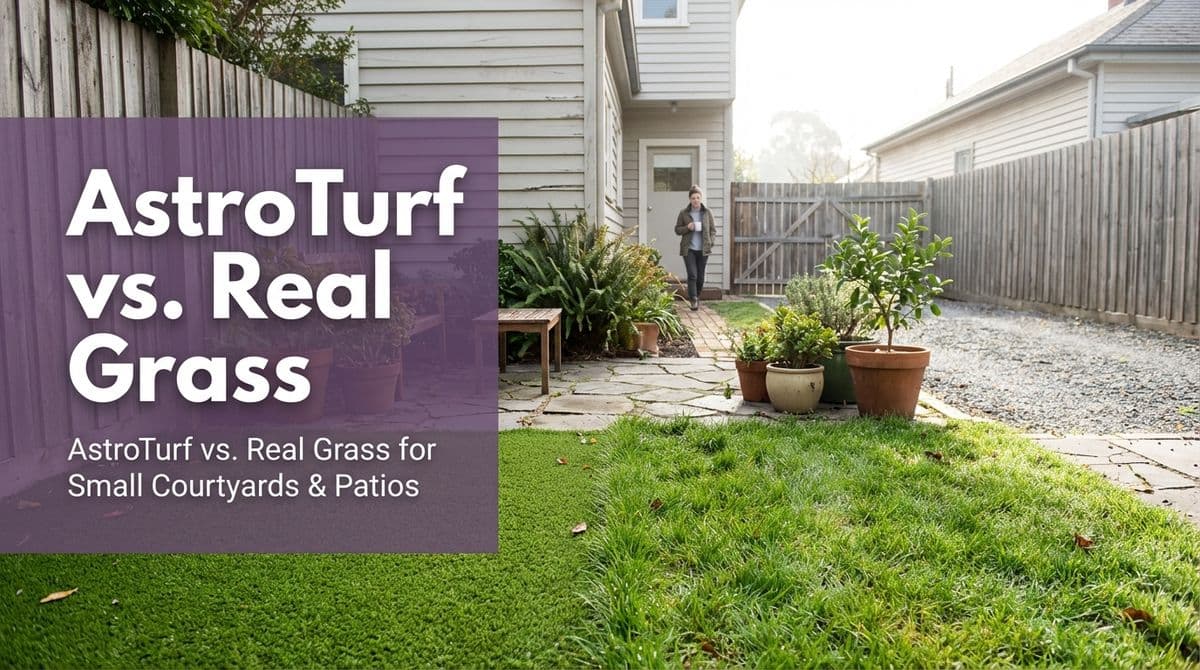
We recently got a call from a customer — let's call her Karen — who had just moved into a home with a small, enclosed front courtyard. It had concrete, a brick retaining wall, and some older plantings, and she was ready to refresh it. Her big question: “Should we put in AstroTurf in this little space, or try to do real grass?”
Her reasons probably sound familiar: it’s a small area, fully enclosed, and she really didn’t want to buy a lawnmower just to maintain a tiny patch of grass. That visit turned into a great conversation about turf vs. real grass in compact courtyards and patios — and I’ll walk you through the same things we discussed with her.
Why Small Enclosed Spaces Are Tricky for Real Grass
Before we get into the pros and cons, it helps to understand why real grass often struggles in these little courtyards and patios.
- Limited sun: Tall walls, fences, or the house itself can block sunlight, making it hard for turfgrass to thrive.
- Poor air flow: Enclosed spaces tend to stay damp, which can lead to moss, fungus, and bare patches.
- Access for maintenance: Getting a mower, edger, or even a wheelbarrow in and out can be a hassle.
- Drainage challenges: Concrete and brick can trap water if the area isn’t graded or drained properly.
When I first stepped into Karen’s courtyard, all of those challenges were present — which is exactly why she was leaning toward AstroTurf.
AstroTurf in Small Courtyards: Pros and Cons
Modern synthetic turf has come a long way, and, like I told Karen, it’s gotten much more realistic-looking in the last few years. That’s a big reason it’s become so popular for small, enclosed spaces.
Benefits of AstroTurf
- Low maintenance: No mowing, edging, fertilizing, or reseeding. A quick rinse and occasional brushing is usually enough.
- Always green: Shade, pets, and foot traffic don’t create bare or muddy spots the way they do with natural grass.
- Great for tiny areas: In spaces too small to justify lawn equipment, turf gives you the lawn look without the hassle.
- Clean underfoot: Ideal for spots right off front doors or patios where you don’t want people tracking mud inside.
In a courtyard like Karen’s, where you might sit with a cup of coffee or welcome guests, that consistently tidy look is a big plus.
Downsides of AstroTurf
- Initial cost: Quality turf plus proper base prep usually costs more up-front than installing sod or seed.
- Heat: Synthetic turf can get hotter than natural grass in direct sun. In a shaded courtyard, this is less of a problem, but it’s worth considering.
- Surface feel: It’s not quite the same as cool, living grass under bare feet, even though higher-end products are comfortable.
- Drainage depends on installation: If the base isn’t prepped correctly, water can pool or odors can build up (especially with pets).
The key is good installation: for Karen, we talked about adding a compacted gravel base and checking the existing concrete and brick layout to make sure water would still move away from the house.
Real Grass in Courtyards: When It Still Makes Sense
Even though Karen felt real grass wouldn’t be practical, there are situations where we still recommend it in small spaces.
- Open-to-sky courtyards with plenty of sun and decent air circulation.
- Homeowners who love gardening and don’t mind the regular mowing and care.
- Kids and pets that prefer natural ground and spend a lot of time playing on it.
But in most fully enclosed front patios — especially those already framed by concrete and brick — turf usually wins on practicality. That’s exactly the conclusion Karen reached once we walked through her options.
Design Ideas: Blending Turf with Concrete, Brick, and Plants
Our customer didn’t just want a patch of green; she wanted a refreshed, inviting courtyard. Here are some of the design ideas we discussed that you might consider for your own space.
1. Turf as a Soft “Rug” in a Hardscape Room
If you already have concrete or pavers, synthetic turf can act like a soft area rug:
- Create a clean rectangular or oval turf area as the visual center of the courtyard.
- Float a small bistro set or bench on the turf for a cozy seating nook.
- Edge the turf with brick or metal edging so the transition looks intentional and crisp.
In Karen’s case, we looked at carving out a turf “inner room” surrounded by her existing brick retaining wall and planting beds.
2. Turf Between Pavers for a Grid Pattern
Another option is to break up larger concrete slabs or add stepping stones, then fill the joints with narrow strips of turf. This can:
- Soften all the hard surfaces without losing walkability.
- Create a modern, geometric look that works well in small spaces.
- Make the courtyard feel more like an outdoor room than a leftover walkway.
This works especially well when you already have a strong brick or concrete layout and just need some green to break it up.
3. Layering Plants Around a Turf Core
When Karen mentioned wanting a “fresh set of eyes for planting,” we talked about framing the turf with low-maintenance plants:
- Evergreen structure: Small shrubs or dwarf conifers in the beds along the brick wall.
- Seasonal color: Perennials or containers that can be updated a couple times a year.
- Vertical interest: Trellises, wall planters, or a vine to soften tall walls without eating up floor space.
The idea is to let turf function as clean, simple flooring, while the plants add the life and texture.
How to Decide: AstroTurf or Real Grass for Your Courtyard?
When I’m standing in a small enclosed patio with a homeowner, we usually walk through three quick questions:
- How much sun and airflow do we have? If it’s shady and closed-in, synthetic turf usually performs better.
- How much maintenance do you realistically want? If mowing a tiny patch sounds annoying, that’s a strong point for turf.
- What’s the main use? Quiet seating area, pet zone, kids’ play spot, or just a pretty view from inside? The use often points toward one solution.
If you’re looking at your own small courtyard or enclosed patio and debating AstroTurf versus real grass, we’re happy to come out, take a look, and give you some tailored ideas — just like we did for Karen. A little planning goes a long way in these compact spaces, and done right, they can become some of the most enjoyable “rooms” in your home.